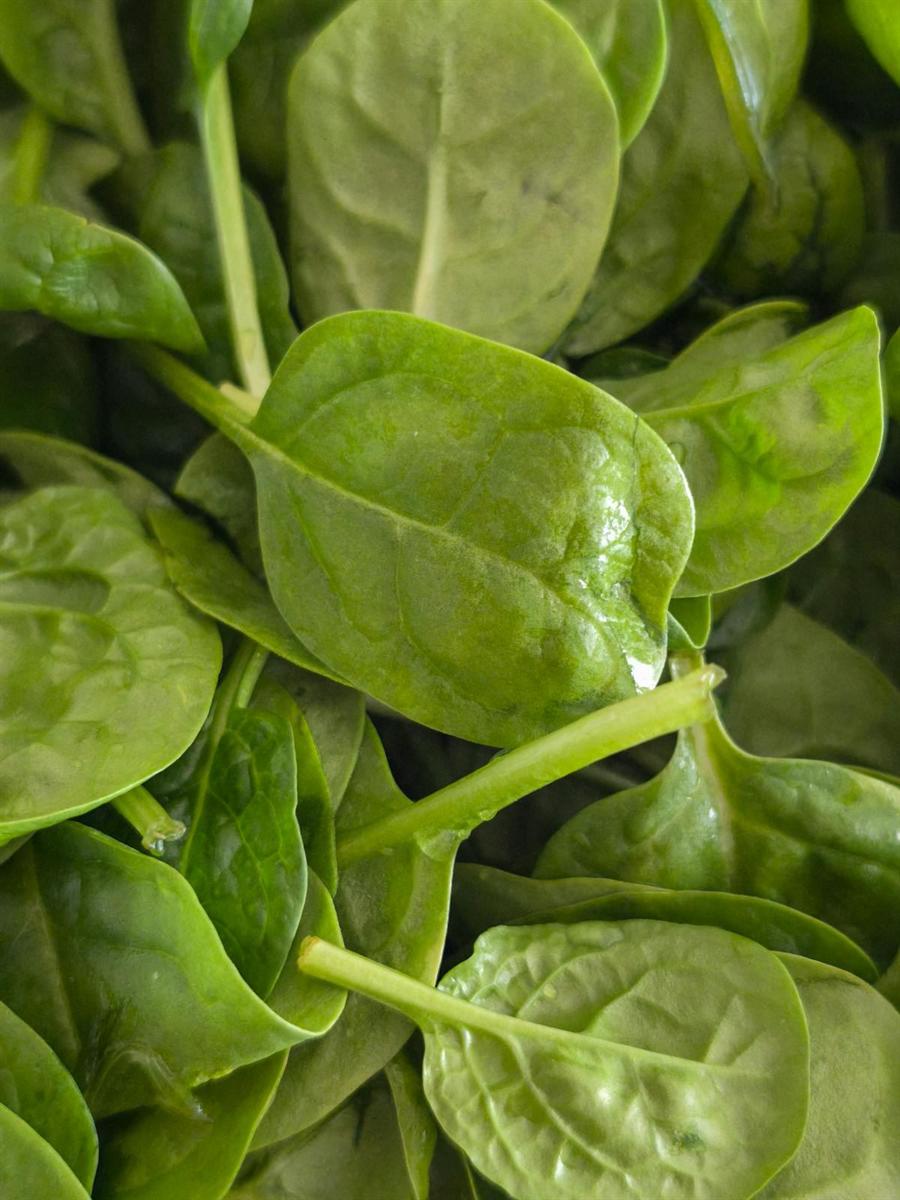
Spinach
Quick answer
Spinach provides lutein, zeaxanthin, nitrates, and folate in one of the most nutrient-dense leafy greens people use regularly. Its combination of carotenoids, flavonoids, and minerals makes it a practical everyday vegetable for an anti-inflammatory eating pattern, especially when you want a green that works both raw and cooked.
What spinach is and how it fits an anti-inflammatory diet
Spinach (Spinacia oleracea) is a leafy green vegetable in the amaranth family, originating in ancient Persia. It is available fresh (baby and mature leaves), frozen (chopped or leaf), and canned. Baby spinach has a milder flavor and more tender texture.
Spinach is used worldwide - in Indian palak paneer, Middle Eastern fatayer, Greek spanakopita, Japanese gomaae, and Western salads and smoothies. It cooks down significantly (about 90% volume reduction), which is one reason it fits anti-inflammatory cooking so well: it can disappear into soups, eggs, beans, and grain dishes without making meals feel heavy or complicated.
Why spinach may support an anti-inflammatory diet
Spinach contains lutein and zeaxanthin, carotenoids that accumulate in the retina and have been studied for their antioxidant effects. It also provides glycoglycerolipids, compounds that may help protect the digestive tract lining. The nitrate content of spinach is converted to nitric oxide in the body, which supports vascular function.
Spinach is rich in folate, a B vitamin involved in DNA methylation and homocysteine metabolism. Elevated homocysteine is associated with increased inflammatory markers and cardiovascular risk. Adequate folate intake helps maintain normal homocysteine levels.
Why spinach is one of the easiest greens to keep using
Spinach is often easier to repeat than sturdier greens because it asks less of the cook. Baby spinach can go straight into salads or smoothies, while mature spinach wilts quickly in soups, pasta, eggs, beans, and grain bowls. That flexibility gives it a real advantage in everyday routines.
It also lets people move between raw and cooked meals without changing ingredients completely. A bag of spinach can cover breakfast, lunch, and dinner in a way that makes healthy eating feel more connected instead of more complicated.
Key nutrients and compounds
A 100g serving of raw spinach provides approximately 28mg vitamin C (31% DV), 194mcg folate (49% DV), 558mcg beta-carotene, 12.2mg lutein+zeaxanthin, 2.9g protein, 79mg magnesium (19% DV), and 2.7mg iron (15% DV). Cooked spinach is more concentrated - 100g cooked provides roughly 3x the nutrients of 100g raw.
Potential health benefits
- Exceptionally high in lutein and zeaxanthin for eye and antioxidant support
- Rich in folate for homocysteine regulation and DNA health
- Contains nitrates that support nitric oxide production and vascular function
- Provides iron and magnesium in meaningful amounts for a vegetable
- Cooks down dramatically, making it easier to work more greens into a meal
How to use spinach
- Add handfuls of baby spinach to smoothies - it blends easily with fruit
- Wilt spinach into soups, stews, and curries in the last 2 minutes of cooking
- Use as a salad base with olive oil, lemon, nuts, and seeds
- Cook briefly with garlic and olive oil as a quick side dish (2-3 minutes)
- Layer into omelets, frittatas, and scrambled eggs
- Blend into pesto with basil, pine nuts, and parmesan
Raw or cooked spinach?
Both can make sense, and most people do best with both. Raw spinach keeps more vitamin C and folate, while cooked spinach makes some carotenoids and minerals easier to absorb. The better choice often depends less on theory and more on which form you are actually willing to keep eating.
If large raw salads do not appeal to you, that is not a problem. Spinach still does its job well when it is folded into soups, eggs, curries, beans, or pasta.
How to shop for and store spinach
Buy pre-washed baby spinach for convenience or bunched mature spinach for cooking. Frozen spinach is nutritionally comparable and often more economical for soups, pasta, eggs, and other cooked dishes. Store fresh spinach in the refrigerator and use within 5-7 days, since it wilts quickly.
FAQ
Is spinach a good anti-inflammatory vegetable?
Spinach can be a strong anti-inflammatory vegetable because it provides lutein, zeaxanthin, folate, and nitrates in a form that fits easily into regular meals. Its biggest strength is how many different ways people can keep using it.
Is raw or cooked spinach more nutritious?
Both have advantages. Cooking increases the bioavailability of beta-carotene, lutein, and iron by breaking down cell walls. Raw spinach retains more vitamin C and folate. Eating both forms provides the broadest nutrient access.
Does spinach have too much oxalate?
Spinach is high in oxalates, but that does not make it a problem food for most people. Cooking and draining spinach reduces oxalate content, and many people do well rotating spinach with other greens instead of relying on it alone every day.
What is the easiest way to eat more spinach?
The easiest way is usually to fold spinach into meals you already make, such as eggs, soups, pasta, grain bowls, smoothies, and sauteed dishes. It does not need to start with a large salad.
Can spinach really boost iron levels?
Spinach provides non-heme iron, which is less bioavailable than heme iron from animal sources. Pairing spinach with vitamin C-rich foods like lemon juice or tomatoes improves iron absorption.
Evidence note
Spinach nutrients have been studied extensively in the context of cardiovascular health, eye health (AREDS studies on lutein/zeaxanthin), and dietary nitrate research. Epidemiological data consistently associates higher leafy green intake with lower inflammatory markers and reduced chronic disease risk.
This page describes spinach as a supportive food within a broader anti-inflammatory eating pattern, not as a standalone medical treatment.