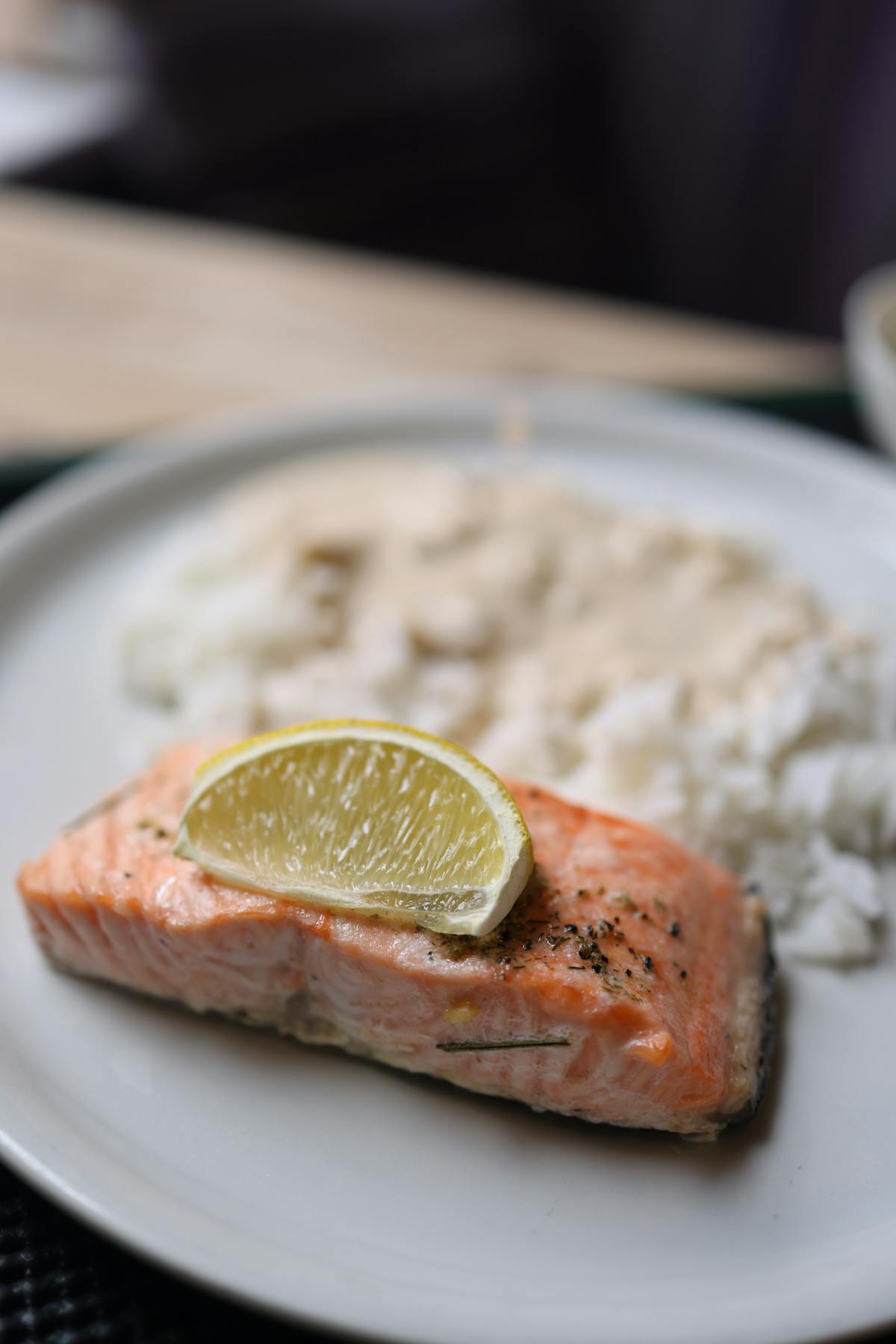
Salmon
Quick answer
Salmon fits well into an anti-inflammatory diet because it is rich in EPA and DHA omega-3 fats and easy to build simple meals around. A 100 g serving of cooked Atlantic salmon usually provides about 2.0 to 2.5 g of combined omega-3, which is one reason salmon comes up so often in questions about EPA, DHA, and inflammation.
What salmon is and how it fits an anti-inflammatory diet
Salmon is a cold-water fatty fish that is commonly sold fresh, frozen, canned, or smoked. Wild-caught varieties include sockeye, king, and coho, while farmed Atlantic salmon is the type many people see most often in grocery stores.
It shows up in many familiar meals, from baked fillets and rice bowls to salads, sandwiches, and breakfast toast. That flexibility is part of why salmon fits an anti-inflammatory diet so easily. It brings omega-3 fats people often look for, but it also feels familiar enough to use regularly instead of saving it for special meals.
Why salmon is often a strong anti-inflammatory choice
Salmon provides EPA and DHA, two long-chain omega-3 fats that are often discussed in connection with inflammation and heart health. Unlike plant omega-3 sources that need extra conversion in the body, EPA and DHA are already in the form your body can use directly.
Salmon also brings high-quality protein, selenium, vitamin B12, and vitamin D. In everyday terms, that means it does more than add one nutrient. It can help build meals that feel balanced, satisfying, and easier to repeat during the week.
The pink color of salmon comes from astaxanthin, a carotenoid with antioxidant properties. You do not need to think of salmon as a miracle food for that to matter. It is enough to think of it as a strong, reliable option inside a broader anti-inflammatory pattern.
Why salmon is easy to keep in your routine
Salmon is often one of the first foods people add when they want meals to feel a little more anti-inflammatory without making everyday cooking harder. It cooks quickly, tastes familiar to many people, and works in everything from rice bowls to salads and sheet-pan dinners.
It is also easier to repeat than some other fish options. Fresh fillets, frozen portions, and canned salmon all make it possible to keep it in your routine without needing a complicated plan.
Key nutrients in salmon
A 100g serving of cooked Atlantic salmon provides approximately 20g protein, 2.0-2.5g combined EPA and DHA omega-3 fatty acids, 25mcg selenium (45% DV), 3.2mcg vitamin B12 (133% DV), and 11mcg vitamin D (55% DV). It also contains meaningful amounts of niacin, phosphorus, and potassium.
How much omega-3 is in salmon?
If you are searching for how much omega-3 is in salmon, the short answer is that salmon is one of the richest everyday food sources. A 100 g serving of cooked Atlantic salmon usually provides around 2.0 to 2.5 g of combined omega-3 fats, mainly EPA and DHA.
Exact amounts vary by species and preparation. King and sockeye salmon are often discussed as richer options, while farmed Atlantic salmon may also provide substantial omega-3 because of its higher overall fat content. In practice, the easiest takeaway is that salmon is usually a strong omega-3 choice whether you buy it fresh, frozen, or canned.
EPA and DHA in salmon
Salmon contains EPA and DHA, the two long-chain omega-3 fats most people are looking for when they search about fish and inflammation. These are different from ALA, the plant omega-3 found in foods like walnuts and flax seeds, because EPA and DHA are already in the form the body can use more directly.
That is one reason salmon appears so often in nutrition guidance. When people ask about DHA in salmon, EPA in salmon, or salmon fatty acids, they are usually trying to understand whether salmon is a meaningful source. The answer is yes: salmon is one of the clearest whole-food sources of both.
Can salmon cause inflammation?
Plain salmon is generally included as a supportive food in anti-inflammatory eating patterns rather than a food to avoid. Its EPA and DHA omega-3 fats are one reason people often choose it when they want meals to feel more balanced.
Preparation still matters. Baked, grilled, poached, or canned salmon can fit easily into everyday meals. Heavily fried salmon or meals built around refined sides and sugary sauces may fit an anti-inflammatory pattern less well, even though the salmon itself still contains useful nutrients.
Potential health benefits
- Provides EPA and DHA omega-3 fats that are often linked with inflammation support
- Offers complete protein that can make meals more filling and easier to build around
- Delivers vitamin D and B12, two nutrients many adults do not always get enough of
- Pairs naturally with vegetables, whole grains, legumes, and healthy fats
- Works well in meal prep, quick dinners, and easy lunch leftovers
How to eat salmon
- Bake a salmon fillet at 200°C (400°F) for 12-15 minutes with olive oil, lemon, and herbs
- Add canned salmon to grain bowls, salads, or pasta for a quick protein boost
- Make salmon patties with canned salmon, oats, egg, and herbs for meal prep
- Use smoked salmon on whole-grain toast with avocado and capers for breakfast
- Poach salmon in a light broth with ginger and vegetables for a gentle weeknight dinner
- Grill salmon steaks with a simple marinade of soy sauce, garlic, and honey
How often to eat salmon
A practical place to start is one or two salmon meals per week, then build from there if it feels easy to maintain. Many dietary guidelines suggest eating fatty fish a couple of times each week, but the more useful goal for most people is simply consistency.
Canned and smoked salmon
Canned salmon still contains omega-3 fats, which is why it can be such a useful pantry option. If you are comparing canned salmon and fresh salmon, the biggest differences are usually texture, salt level, and convenience rather than whether omega-3 is still there.
Smoked salmon also still contains EPA and DHA. When people ask whether smoked salmon has omega-3, the answer is yes. The more important thing to watch is sodium, since smoked products are often much saltier than plain cooked salmon.
How to shop for and store salmon
Fresh salmon should look moist and firm, without a strong fishy smell. Frozen salmon is a good choice when you want convenience, and canned salmon can be especially useful if cost, storage, or quick lunches matter more than presentation.
FAQ
Is salmon anti-inflammatory?
Salmon can be a helpful part of an anti-inflammatory diet because it provides EPA and DHA omega-3 fats and is easy to build regular meals around. It is most useful as one consistent food in an overall pattern, not as a standalone fix.
Does salmon have omega-3?
Yes. Salmon is one of the best food sources of EPA and DHA omega-3 fats, which is one reason it is often included in anti-inflammatory eating patterns.
How much omega-3 is in salmon?
A 100 g serving of cooked Atlantic salmon usually provides about 2.0 to 2.5 g of combined EPA and DHA omega-3 fats. Exact amounts vary by species, cut, and whether the fish is wild or farmed.
Can salmon cause inflammation?
Plain salmon is generally included as a supportive food in anti-inflammatory eating patterns. Preparation matters: heavily fried salmon or meals with a lot of refined ingredients may fit that pattern less well than baked, grilled, or canned salmon served with vegetables and whole grains.
Does canned salmon contain omega-3?
Yes. Canned salmon still contains omega-3 fats and can be an easy, affordable option for salads, grain bowls, sandwiches, and quick weeknight meals.
Does smoked salmon have omega-3?
Yes. Smoked salmon still contains omega-3 fats because smoking does not remove EPA and DHA. The main tradeoff is usually sodium, not the loss of omega-3.
How often should I eat salmon?
Many dietary guidelines suggest eating fatty fish like salmon 2-3 times per week. This can be a practical way to keep omega-3 intake consistent without overcomplicating meal planning.
Evidence note
Research on omega-3 fats and inflammatory markers has been reviewed in multiple systematic reviews and meta-analyses. Regular fish intake is often studied as part of a broader dietary pattern rather than as a single isolated fix.
This page describes salmon as a supportive food within a wider anti-inflammatory way of eating, not as a medical treatment. People with specific health concerns should still speak with qualified healthcare providers for personal advice.