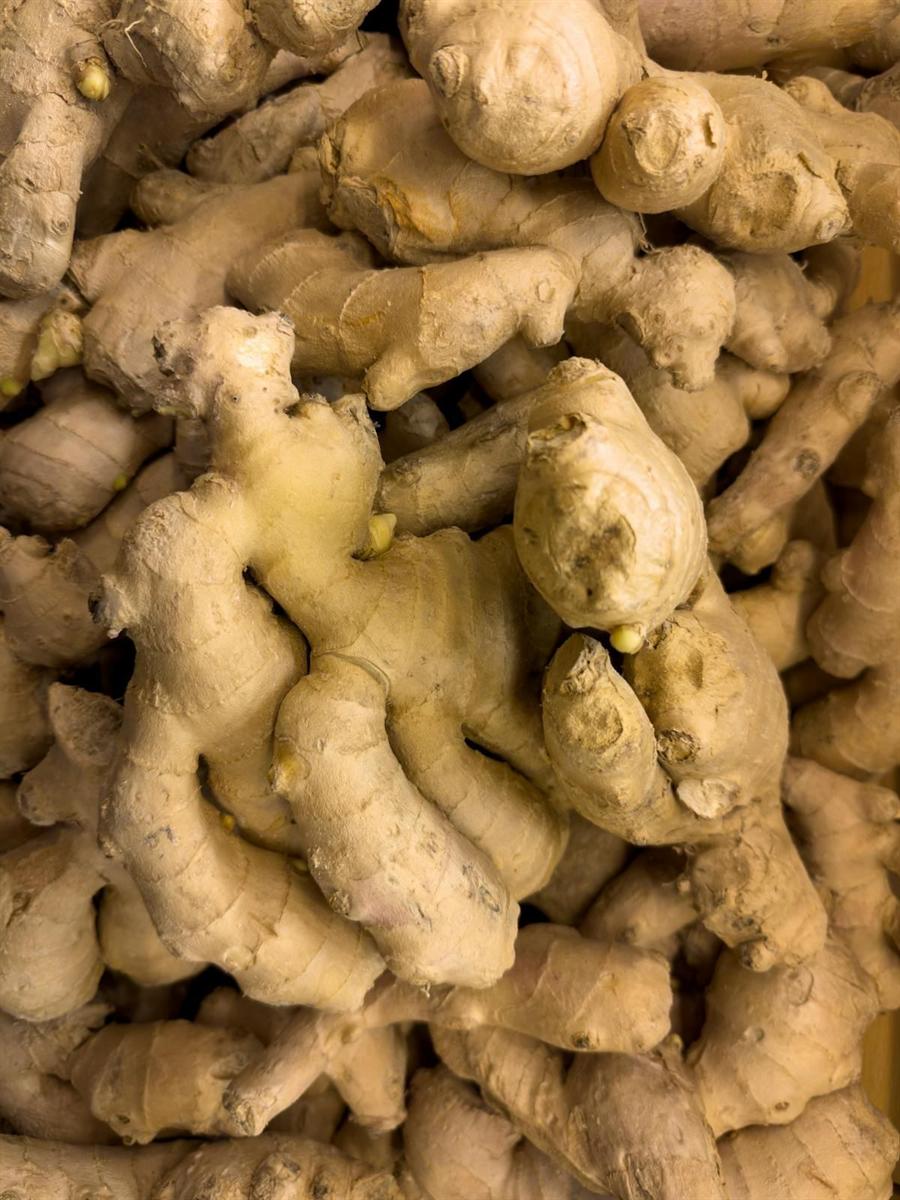
Ginger
Quick answer
Ginger can fit well in an anti-inflammatory diet because it contains gingerols and shogaols, compounds that have been studied for anti-inflammatory effects. It is also one of the easiest spices to use often, whether that means adding it to meals, soups, or simple tea-style drinks.
What it is
Ginger (Zingiber officinale) is a flowering plant whose rhizome (underground stem) is widely used as a spice and in traditional medicine. It originated in Southeast Asia and has been traded globally for over 2,000 years. Fresh ginger, dried ground ginger, pickled ginger, and crystallized ginger are all common forms.
Ginger is fundamental to cuisines across Asia, India, the Middle East, and the Caribbean. It appears in stir-fries, curries, soups, teas, baked goods, and beverages like ginger ale and ginger beer. It has a warm, pungent flavor that becomes milder and sweeter when cooked.
Why ginger can be a helpful choice
Fresh ginger is rich in gingerols, especially 6-gingerol. These compounds have been studied for their ability to influence inflammatory pathways connected with prostaglandins and leukotrienes. When ginger is dried or cooked, some gingerols convert to shogaols, which also have bioactive effects.
What makes ginger especially useful is not just the research. It is also easy to work into real life. You can grate it into soups, curries, stir-fries, dressings, and warm drinks without needing to overhaul the rest of your meals.
Compared with many culinary spices, ginger also has more clinical research behind it. The strongest evidence relates to nausea relief, while smaller studies suggest modest support for muscle soreness, osteoarthritis discomfort, and menstrual pain.
Key nutrients and compounds
A 10g serving of fresh ginger (about 1 tablespoon grated) provides approximately 0.2mg manganese, 0.5mg vitamin C, and 42mg potassium. While micronutrient amounts per serving are small, the gingerol content (typically 1-3% of fresh weight) is the primary nutritional interest. Dried ginger is more concentrated in shogaols.
Potential health benefits
- Provides gingerols and shogaols that have been studied for anti-inflammatory activity
- Has some of the strongest clinical evidence among culinary spices for nausea support
- May offer modest support for muscle soreness and joint discomfort
- Adds warmth and flavor to meals without needing much extra effort
- Works well fresh, frozen, dried, powdered, and brewed
How to eat ginger
- Grate fresh ginger into stir-fries, curries, and soups
- Brew a simple ginger tea by steeping sliced ginger in hot water for 5-10 minutes
- Add grated ginger to smoothies with turmeric, banana, and coconut milk
- Use pickled ginger (gari) as a palate cleanser with sushi or grain bowls
- Make a ginger-turmeric golden milk with warm plant milk and honey
- Mince ginger into salad dressings with soy sauce, sesame oil, and rice vinegar
Shopping and storage
Choose fresh ginger with smooth, taut skin and a spicy fragrance. Avoid pieces that are wrinkled, soft, or moldy. Store unpeeled ginger in the refrigerator for 2-3 weeks, or freeze for up to 6 months (frozen ginger grates easily).
FAQ
How much ginger should I eat per day?
Studies typically use 1-3g of dried ginger or 5-10g of fresh ginger per day. For culinary use, adding ginger to 1-2 meals daily is a practical approach. Higher doses may cause mild digestive discomfort in some people.
Is fresh ginger better than powdered?
Fresh ginger is higher in gingerols, while dried/powdered ginger is higher in shogaols. Both have bioactive properties. Fresh ginger has a brighter flavor for cooking, while powdered is more convenient and concentrated.
Can ginger help with arthritis?
Several small clinical trials have shown modest improvements in osteoarthritis pain with ginger supplementation, but results are inconsistent. Ginger may be a helpful complement to standard treatment but should not replace medical care.
Does ginger interact with blood thinners?
Ginger may have mild antiplatelet effects at high doses. People taking blood-thinning medications should discuss ginger supplementation (not culinary use) with their healthcare provider.
Evidence note
Ginger has been studied in more than 100 clinical trials across various conditions. The strongest evidence supports its use for nausea. Anti-inflammatory evidence includes several systematic reviews showing modest effects on CRP and other inflammatory markers, with the caveat that most studies use concentrated supplements rather than ordinary culinary amounts.
This page describes ginger as a supportive food within a broader anti-inflammatory eating pattern, not as a standalone medical treatment.