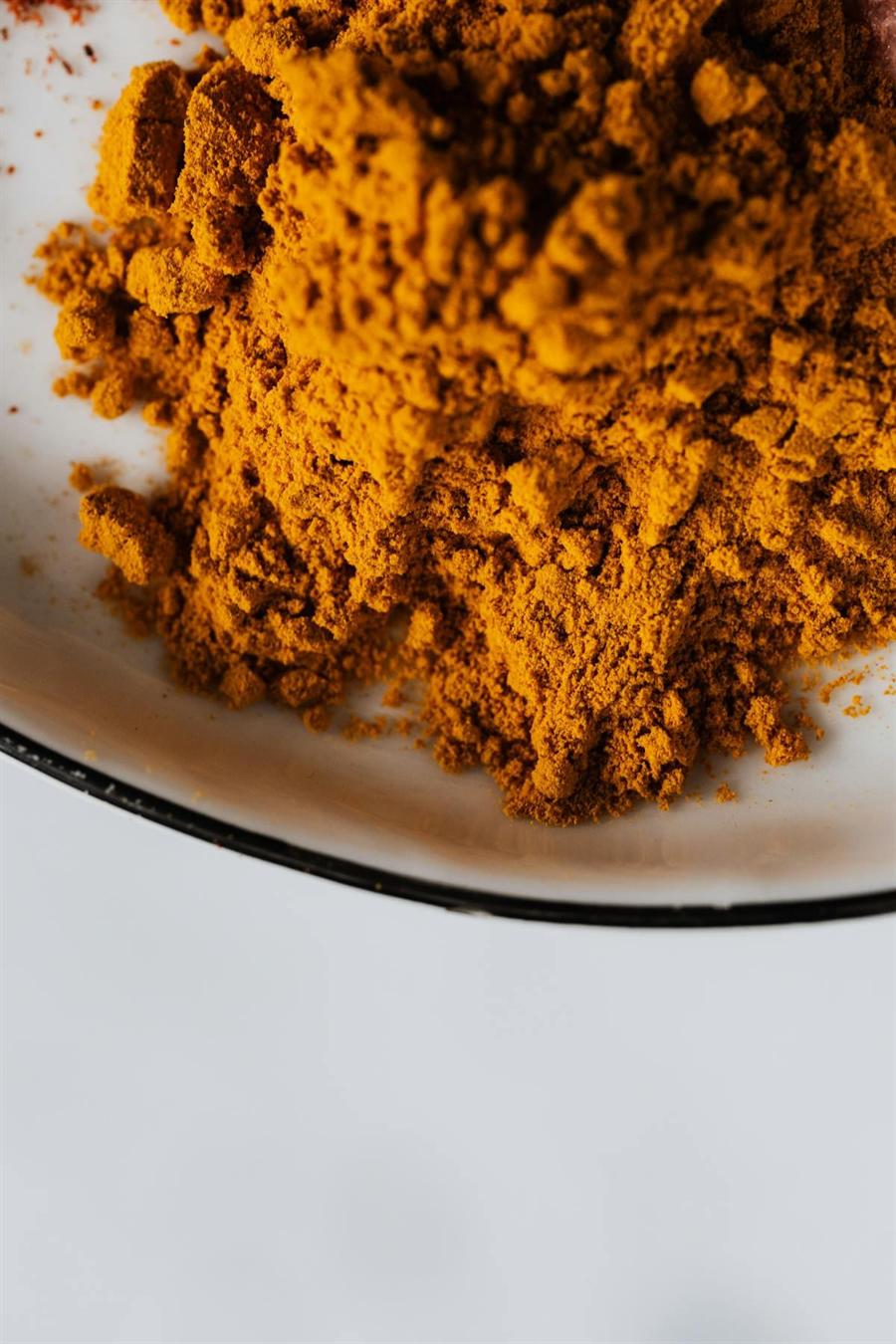
Turmeric
Quick answer
Turmeric is anti-inflammatory in the sense that it contains curcumin, a polyphenol studied for inflammatory signaling. For everyday food use, the best approach is simple: use turmeric regularly in meals, tea, or golden milk with black pepper and a little fat, while treating high-dose curcumin supplements as a separate medical conversation.
What it is
Turmeric is a golden-yellow spice derived from the rhizome of Curcuma longa, a plant in the ginger family. It has been used for thousands of years in South Asian cooking and traditional Ayurvedic practices. It is available as fresh root, dried ground powder, and in supplement form.
In Indian cuisine, turmeric is a foundational spice in curries, dal, and rice dishes. It is also used in Southeast Asian cooking, Middle Eastern spice blends, and increasingly in Western preparations like golden milk lattes and smoothies. The active compound curcumin makes up roughly 2-5% of turmeric powder by weight.
Why turmeric may support an anti-inflammatory diet
Turmeric is strongly connected with curcumin, the yellow-orange compound that gives turmeric much of its color. Curcumin has been studied for how it may influence inflammatory signaling, which is why searches around turmeric, curcumin, inflammation, joint pain, and arthritis often overlap.
The practical part matters. A curry, soup, rice dish, salad dressing, turmeric tea, or golden milk will not act like a medicine, but it can help you build a spice-rich pattern that makes anti-inflammatory meals easier to repeat. That is where turmeric fits best on this site: as a useful food habit, not as a cure.
Curcumin is not absorbed especially well on its own. Pairing turmeric with black pepper and a source of fat can improve absorption, which is why turmeric often works well with olive oil, avocado oil, coconut milk, dairy milk, or a meal that already contains healthy fats.
Key nutrients and compounds
A teaspoon (about 3g) of ground turmeric provides approximately 9 calories, 0.3g protein, 0.1g fat, 2g carbohydrates, and 0.7g fiber. It contains small amounts of iron (5% DV), manganese (8% DV), and potassium. The curcumin content in standard turmeric powder is roughly 60-150mg per teaspoon.
Potential health benefits
- Provides curcumin, a polyphenol studied for its effects on NF-kB and COX-2 inflammatory pathways
- Adds polyphenol diversity to meals when used as a regular cooking spice
- Pairs synergistically with black pepper to improve curcumin bioavailability
- Contributes trace minerals including iron and manganese
- Supports a spice-forward cooking style that can reduce reliance on salt and sugar for flavor
How to eat turmeric
- Add ground turmeric to curries, soups, and stews along with black pepper and a source of fat
- Make golden milk by simmering turmeric with warm milk (or plant milk), black pepper, cinnamon, and honey
- Mix turmeric into scrambled eggs or tofu scramble for color and mild earthy flavor
- Add a pinch of turmeric to rice cooking water for golden-colored rice
- Blend fresh turmeric root into smoothies with mango, ginger, and coconut milk
- Use turmeric in salad dressings with olive oil, lemon juice, and black pepper
Turmeric tea for inflammation
Turmeric tea is one of the easiest ways to use turmeric consistently. A simple version is warm water or milk with turmeric, ginger, black pepper, cinnamon, and a little honey if needed. For better absorption, use milk, a plant milk with some fat, or drink it with a meal that includes healthy fat.
The benefit is less about one perfect drink and more about the routine it can replace. If turmeric tea helps you drink fewer sugary beverages or gives you a calming evening habit, it can support the larger pattern you are trying to build.
Portion and frequency ideas
A practical approach is to include turmeric in your meals several times per week in portions that feel sustainable. Consistency over time matters more than precise daily targets. Start with one familiar preparation and build from there.
Shopping and storage
Choose turmeric with clear freshness indicators and store according to standard food-safety practices. When available, compare fresh and frozen or shelf-stable options to find the format that best supports your weekly routine.
Turmeric vs ginger for inflammation
Turmeric and ginger are related botanically, but they do different jobs in the kitchen. Turmeric is earthier and more closely tied to curcumin; ginger is sharper, warmer, and often easier to use in tea, soups, stir-fries, and smoothies.
You do not need to choose one. Many practical anti-inflammatory meals use both: turmeric for color and earthy depth, ginger for brightness and warmth. A turmeric-ginger tea or curry base is often more useful than trying to decide which spice is best on paper.
FAQ
Is turmeric anti-inflammatory?
Turmeric contains curcumin, a plant compound studied for effects on inflammatory signaling. In food amounts, turmeric is best used as a supportive spice within an overall anti-inflammatory eating pattern, not as a treatment.
Is turmeric tea good for inflammation?
Turmeric tea can be a useful warm drink habit when it replaces sugary drinks or helps you use more spices. Add black pepper and a small amount of fat, such as milk or coconut milk, if you want better curcumin absorption.
Turmeric vs ginger for inflammation: which is better?
Turmeric and ginger are different spices with different active compounds. Turmeric is closely associated with curcumin, while ginger is often used for digestive comfort and warm flavor. For everyday meals, using both is usually more practical than treating one as the winner.
Should I use turmeric supplements for joint pain or arthritis?
Supplement-level curcumin is different from cooking with turmeric. Research is mixed, and supplements can interact with medicines or be inappropriate for some people. If you have joint pain, arthritis, gallbladder disease, liver concerns, are pregnant, or take blood-thinning medicine, ask a qualified healthcare professional before using supplements.
Does turmeric need black pepper to work?
Black pepper contains piperine, which can improve curcumin absorption. Turmeric still adds flavor and plant compounds without pepper, but a pinch of black pepper plus a source of fat is a practical cooking combination.
Evidence note
Research on turmeric and curcumin is active, including studies related to osteoarthritis, inflammatory markers, and lipid disorders. The evidence is not the same as saying turmeric treats arthritis or joint pain. NCCIH notes that turmeric and curcumin have been studied for several conditions, but supplement evidence and product quality vary.
This page describes turmeric as a supportive food within a broader anti-inflammatory eating pattern, not as a standalone medical treatment. Readers with specific health concerns should consult qualified healthcare providers for personalized nutrition advice, especially before using curcumin supplements.