Pomegranate
Quick answer
Pomegranate is best thought of as a colorful, polyphenol-rich fruit that can make simple meals feel a little brighter. The arils bring crunch, tart sweetness, fiber, and plant compounds such as punicalagins, ellagitannins, and anthocyanins.
What it is
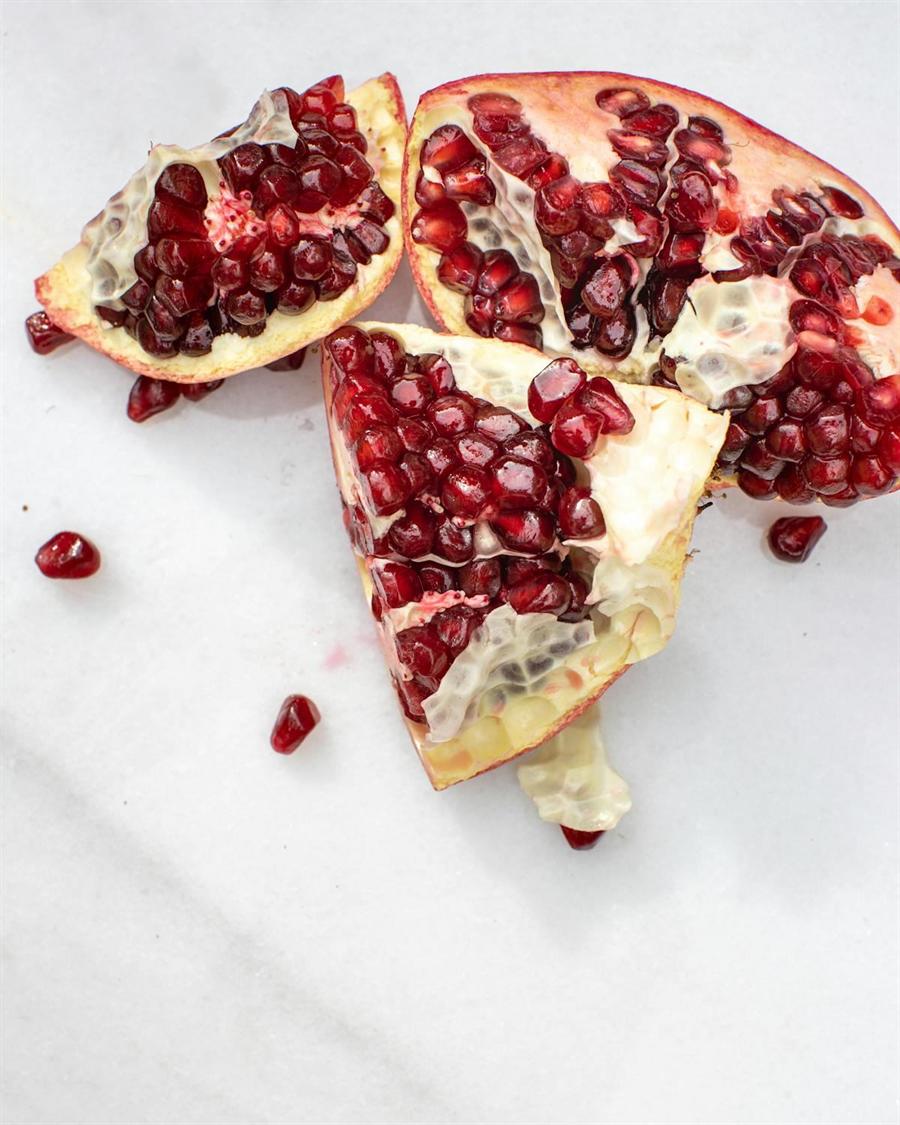
Pomegranate (Punica granatum) is a fruit native to Iran and northern India, now cultivated across the Mediterranean, Middle East, and California. The edible portion consists of hundreds of ruby-red seed sacs called arils, surrounded by a thick inedible rind.
Pomegranate has been a symbol of health and fertility in many ancient cultures. The arils are eaten fresh, pressed into juice, sprinkled over salads and grain bowls, or used in Middle Eastern and Indian cooking. Pomegranate juice and pomegranate molasses are common commercial forms.
Why pomegranate may support an anti-inflammatory diet
Pomegranate gets attention because its deep red arils and juice are rich in polyphenols, especially punicalagins and ellagitannins. Your gut bacteria can turn some of those compounds into urolithins, which is one reason researchers are interested in pomegranate and long-term health.
For everyday eating, the value is simpler: pomegranate can help you add fruit, color, acidity, and texture without much cooking. It works especially well with yogurt, oats, spinach, lentils, walnuts, olive oil, and grain bowls.
Key nutrients and compounds
A 100g serving of pomegranate arils provides approximately 10.2mg vitamin C (11% DV), 236mg potassium (5% DV), 4g fiber, and 1.7g protein. The total polyphenol content of pomegranate juice is among the highest of common fruit juices, with punicalagins contributing the majority.
Potential health benefits
- Contains punicalagins that produce urolithins via gut bacteria - a unique metabolic pathway
- Provides anthocyanins with antioxidant properties
- Pomegranate juice has been studied for effects on blood pressure and arterial function
- High polyphenol density relative to calorie content
- Versatile in both sweet and savory dishes
How to eat pomegranate
- Scatter fresh arils over yogurt, oatmeal, or grain bowls for color and crunch
- Drink 120-240ml of 100% pomegranate juice daily as a polyphenol-rich beverage
- Add arils to salads with spinach, walnuts, and feta cheese
- Use pomegranate molasses as a tangy glaze for roasted vegetables
- Blend arils into smoothies with berries and banana
- Sprinkle over hummus or avocado toast for a Middle Eastern-inspired finish
Shopping and storage
Choose pomegranates that feel heavy for their size, indicating juicy arils. Pre-packaged arils save preparation time. Store whole pomegranates at room temperature for up to 2 weeks or refrigerate for up to 2 months. Arils freeze well for long-term storage.
FAQ
Is pomegranate anti-inflammatory?
Pomegranate can fit well in an anti-inflammatory diet because it provides polyphenols, anthocyanins, fiber, and bright flavor. It is not a treatment on its own, but it can help you build meals around more whole plant foods.
Can you eat pomegranate seeds?
Yes. The juicy red arils are usually eaten with the small seed inside. That is part of what gives pomegranate its crunch and makes it feel more like a whole fruit than a sweet drink.
Is pomegranate juice as good as fresh arils?
Fresh arils give you fiber and a slower, snack-like way to eat pomegranate. Juice is easier and more concentrated, but it is also easier to drink a lot quickly. If you choose juice, look for 100% pomegranate juice without added sugar.
How often should I eat pomegranate?
You do not need a perfect daily target. A small handful of arils on breakfast or salad a few times a week is a useful start. It also works well as a rotating fruit alongside berries, cherries, citrus, and other colorful fruit.
Can pomegranate interact with medications?
Pomegranate juice may interact with some medicines, especially for people taking statins or blood pressure medication. If you take prescription medicine regularly, it is worth asking your clinician before making pomegranate juice a daily habit.
Are pomegranate supplements effective?
Supplements vary a lot. For most people, fresh arils or 100% juice are simpler and easier to judge. They also fit better into real meals, which is usually the point of an anti-inflammatory diet.
Evidence note
Pomegranate has been studied in numerous clinical trials, particularly for cardiovascular markers. Research on urolithin A is emerging, with early human trials showing potential effects on mitochondrial function and muscle health. The gut microbiome's role in converting pomegranate polyphenols adds complexity to individual responses.
This page describes pomegranate as a supportive food within a broader anti-inflammatory eating pattern, not as a standalone medical treatment.