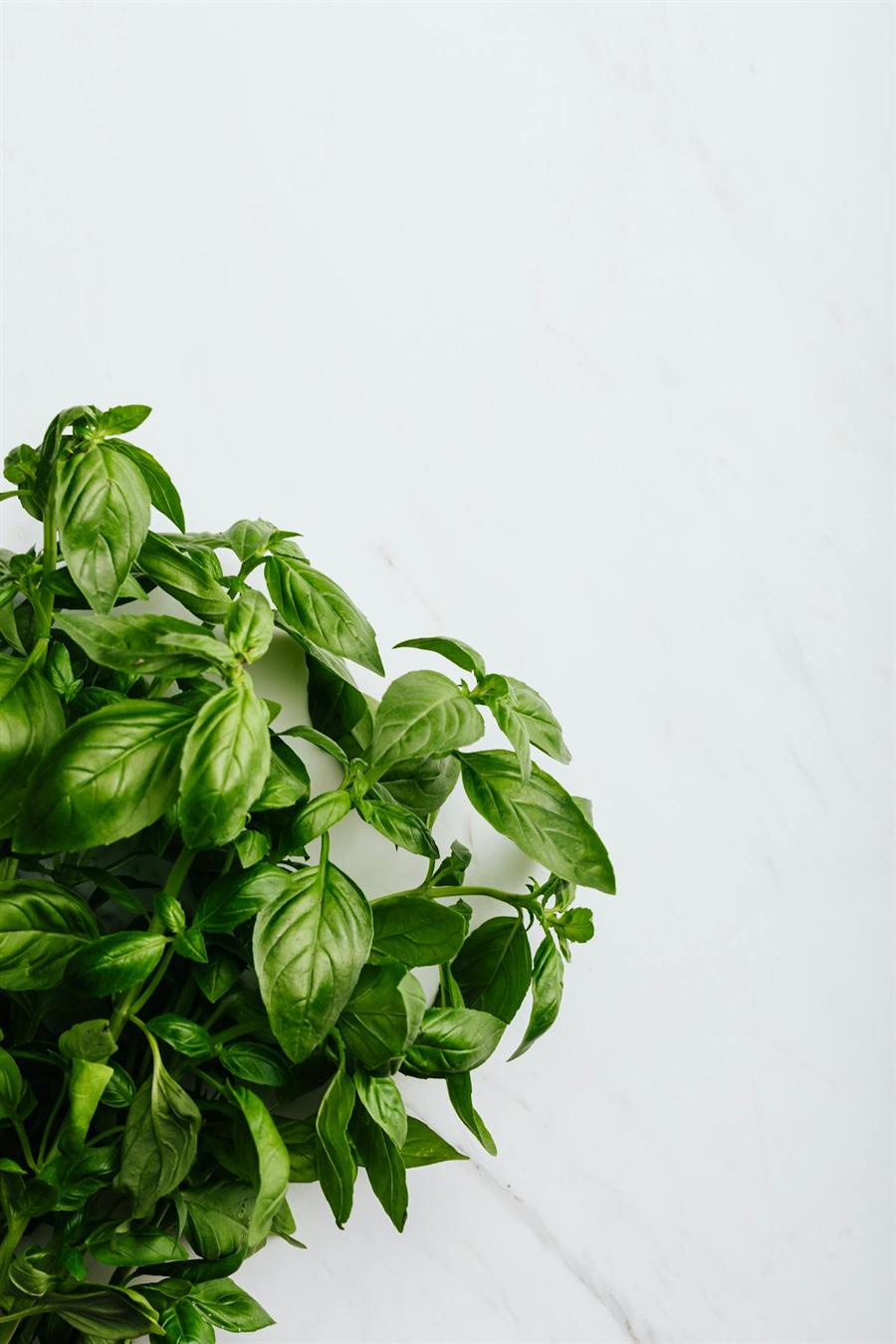
Basil
Quick answer
Basil contains eugenol, rosmarinic acid, and linalool - aromatic compounds with studied antioxidant and anti-inflammatory properties. Fresh basil also provides vitamin K, but its biggest day-to-day value is how easily it makes whole-food cooking taste more alive.
What basil is and how it fits an anti-inflammatory diet
Sweet basil (Ocimum basilicum) is an aromatic herb in the mint family, native to tropical regions of Central Africa and Southeast Asia. It is the most common culinary basil, though Thai basil, holy basil (tulsi), and purple basil are also widely used.
Basil is central to Italian cuisine (pesto, caprese, pasta sauces), Thai cooking (stir-fries, curries), and Vietnamese dishes (pho garnish). It is typically added fresh at the end of cooking to preserve its volatile oils and flavor. That is also why it fits anti-inflammatory cooking so naturally: a small handful can make simple ingredients feel more complete without much extra effort.
Why basil may support an anti-inflammatory diet
Eugenol, the primary volatile compound in basil, has been studied for its ability to inhibit COX-2 enzyme activity, which is involved in prostaglandin-mediated inflammation. Rosmarinic acid has demonstrated antioxidant effects in cell studies by scavenging reactive oxygen species.
While the amounts of these compounds in typical culinary portions are small compared to supplement doses, the consistent use of fresh herbs in cooking contributes to overall dietary polyphenol intake. Mediterranean and Asian dietary patterns, which feature herbs prominently, are associated with lower inflammatory markers.
Why basil is so useful in everyday cooking
Basil is not usually the main ingredient on the plate, and that is part of what makes it valuable. It helps tomato sauces, bean dishes, soups, grain bowls, eggs, and simple salads taste brighter with very little effort, which can make home cooking feel more worth repeating.
That matters for an anti-inflammatory diet. People are more likely to stay with whole-food cooking when meals still feel vivid and satisfying, and basil is one of the herbs that can do that quickly.
Key nutrients and compounds
A 5g serving of fresh basil (about 10 leaves) provides approximately 88mcg vitamin K (73% DV), 0.8mg vitamin C, and trace amounts of manganese, iron, and calcium. The polyphenol content includes eugenol (1-5mg per g of fresh leaf), rosmarinic acid, and various flavonoids.
Potential health benefits
- Contains eugenol with studied COX-2 inhibitory properties
- Provides rosmarinic acid, an antioxidant polyphenol shared with rosemary
- Excellent source of vitamin K even in small culinary amounts
- Enhances the flavor of whole-food meals, supporting dietary adherence
- Easy to grow at home for fresh, year-round access
How to eat basil
- Tear fresh basil over finished pasta dishes, soups, and grain bowls
- Make classic pesto with basil, pine nuts, garlic, olive oil, and parmesan
- Add Thai basil to stir-fries and curries in the last minute of cooking
- Layer fresh basil in caprese salad with tomato, mozzarella, and olive oil
- Blend basil into green smoothies with spinach, banana, and lime
- Infuse olive oil with fresh basil for a simple finishing drizzle
What basil goes well with
Basil is especially good with tomato, garlic, olive oil, white beans, zucchini, eggplant, pasta, and soft cheeses. It also works well in lighter grain bowls and soups where you want a fresh note right at the end.
If you are trying to use it more often, think of basil less as a special garnish and more as a finishing herb that can wake up a meal that already tastes good but needs one brighter edge.
How to shop for and store basil
Store fresh basil at room temperature with stems in water, like a bouquet. Refrigeration causes leaves to blacken quickly, so it is usually better on the counter than in the fridge. Use within 5-7 days. Dried basil retains some flavor but loses much of the fresh aroma that makes basil distinctive. Growing basil at home is one of the easiest ways to keep it on hand.
FAQ
Is basil a good anti-inflammatory herb?
Basil can be a useful anti-inflammatory herb because it contains eugenol, rosmarinic acid, and other aromatic compounds, but its biggest strength is how easily it helps whole-food meals taste better.
Is fresh basil better than dried?
Fresh basil retains more volatile oils and has a brighter flavor. Dried basil still works in cooked dishes, but it does not bring the same aroma. Fresh basil is usually the better choice when basil is meant to stand out.
How should I store fresh basil?
Store fresh basil at room temperature with the stems in water, like a bouquet. Refrigeration tends to blacken the leaves. Use it within 5-7 days for the best flavor.
What does basil go well with?
Basil pairs especially well with tomato, garlic, olive oil, beans, pasta, soups, and grain bowls. It is often most useful as a finishing herb added near the end.
Can I eat too much basil?
Normal culinary amounts of basil are safe for virtually everyone. The bigger caution is with concentrated essential oils or extracts, which are much stronger than food amounts.
Evidence note
Research on basil compounds is primarily preclinical (cell and animal studies). Eugenol and rosmarinic acid have well-documented antioxidant properties in laboratory settings. Human clinical data specifically on basil consumption and inflammatory markers is limited, though the broader evidence on herb-rich dietary patterns is supportive.
This page describes basil as a supportive food within a broader anti-inflammatory eating pattern, not as a standalone medical treatment.